
A Guide to Glaucoma: What You Need to Know
Updated: Mar 20
In recognition of World Glaucoma Week, we're highlighting key information to help raise awareness about glaucoma — often referred to as the "silent disease" because it can develop without noticeable symptoms.
Understanding how it progresses, how it's detected, and how it's managed is key to protecting your vision.
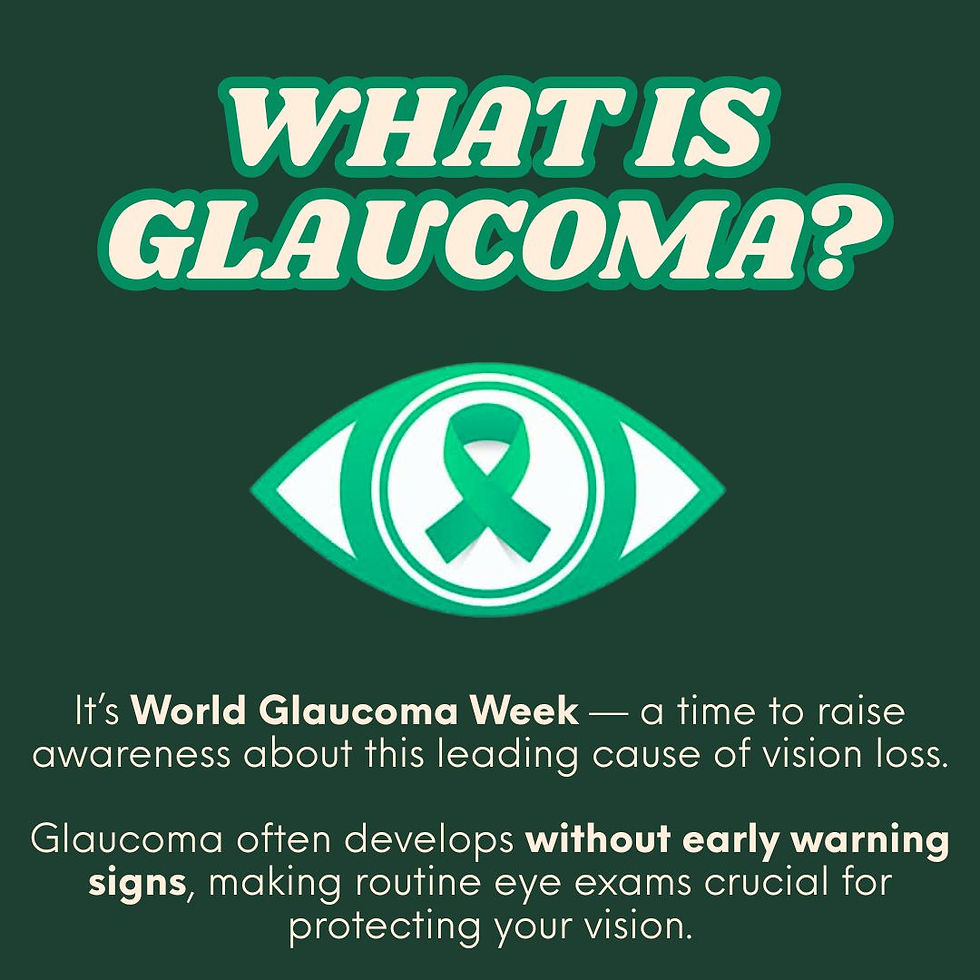


Glaucoma is one of the leading causes of vision loss, often developing gradually and without noticeable changes early on. Because of this, may people are unaware of the condition until it has already progressed.
Understanding who may be at higher risk and the importance of early detection plays a key role in protecting long-term vision.


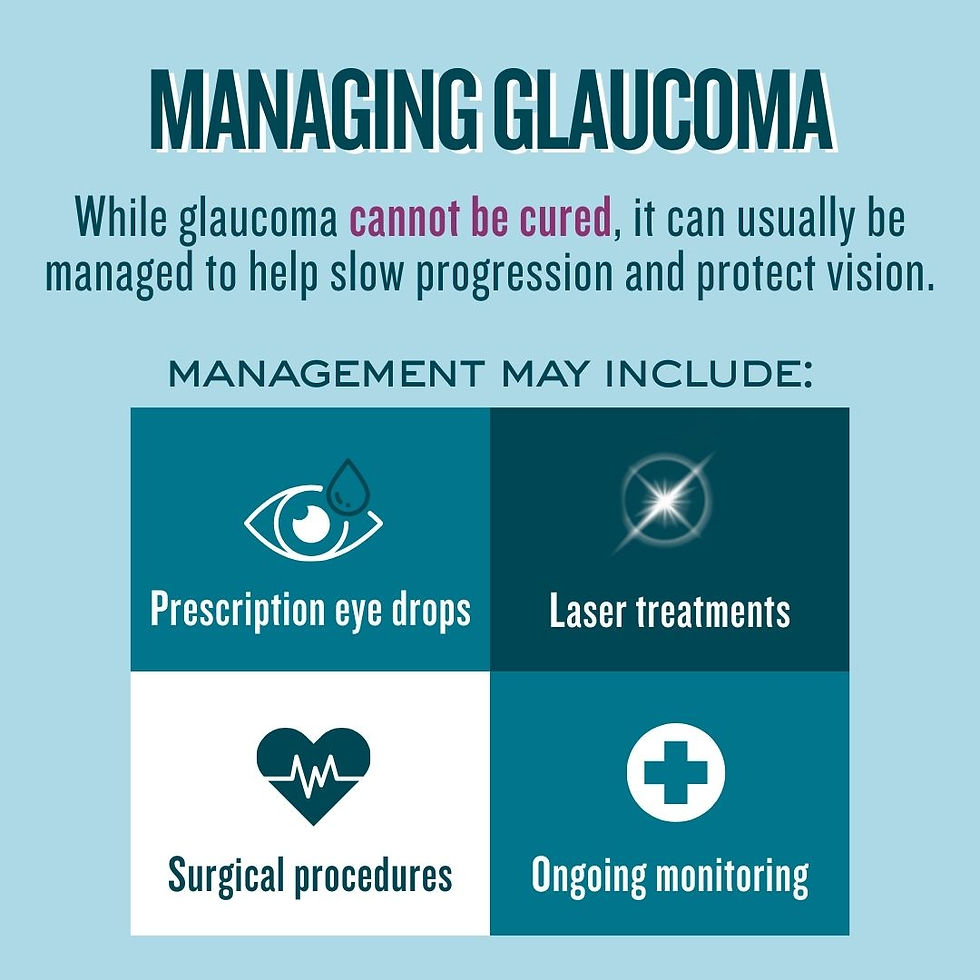

Glaucoma may not present clear symptoms in its early stages, making routine eye exams essential for detection. A combination of diagnostic tools allows for a thorough evaluation and helps identify changes early.
With early diagnosis and proper management, progression can often be slowed, helping to preserve vision over time.

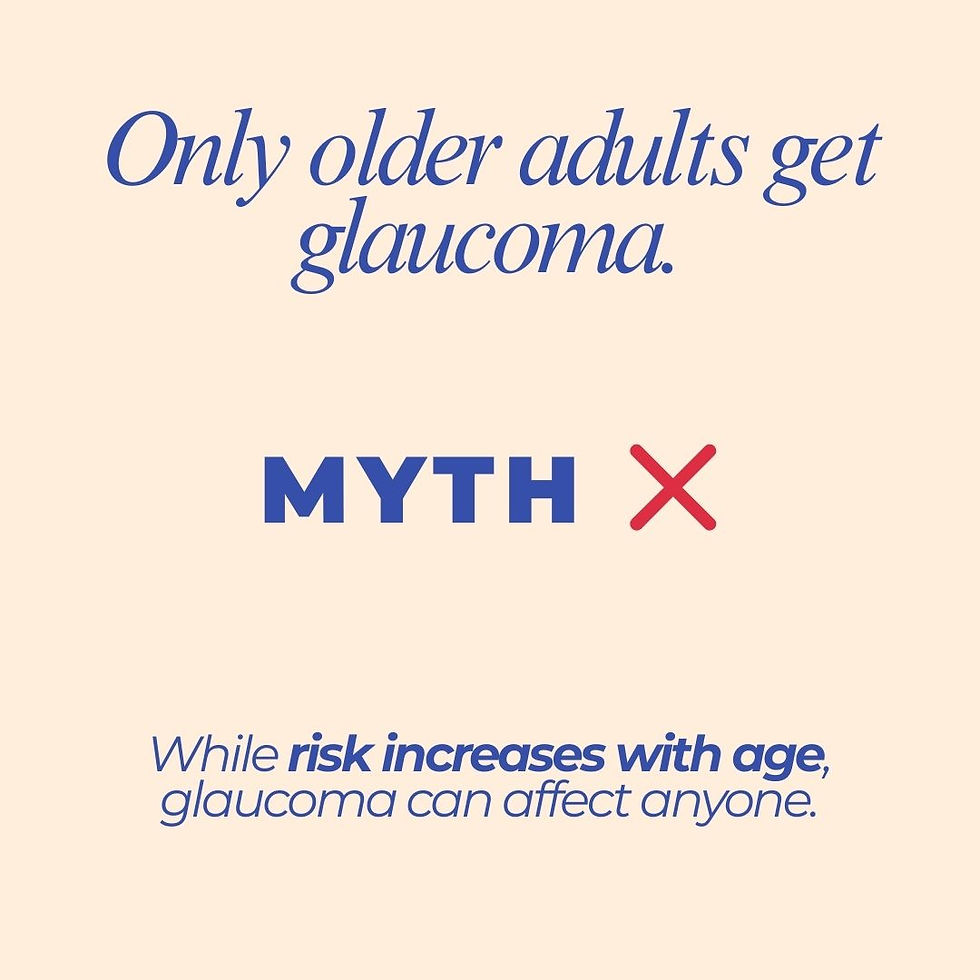


There are many common misconceptions when it comes to glaucoma, which can lead to confusion or delays in care.
Understanding the facts is an important step in recognizing risk, knowing what to expect, and taking a proactive approach to your eye health.


